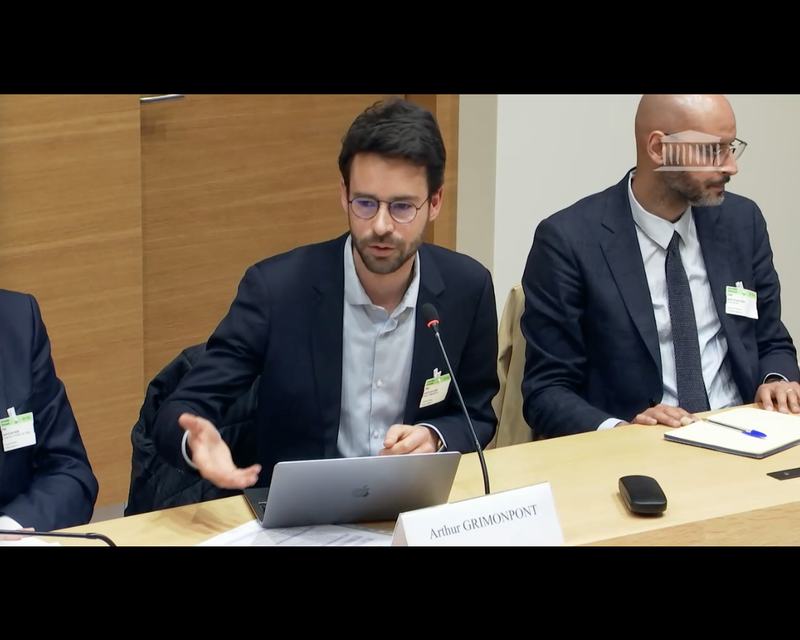
On April 2, 2026, Arthur Grimonpont, head of advocacy at CeSIA, was interviewed by the Parliamentary Office for Scientific and Technological Assessment (OPECST) as part of a session dedicated to the diffusion of innovations in AI uses.
Before the parliamentarians, Arthur provided an overview of the "systemic" risks associated with AI development: information manipulation, biological risks, cyberattacks, and loss of control. These risks worsen as AI capabilities progress, due to a lack of sufficient safeguards.
"These companies are deploying systems to hundreds of millions of people while admitting themselves that there is a significant chance they could be diverted for large-scale malicious purposes, or even escape their control—and yet we are supposed to fear the uncertainty that the law places on their business model. The uncertainty that should concern us is obviously technological before it is regulatory. " Arthur Grimonpont, head of advocacy at CeSIA
Three concrete recommendations were brought to the attention of OPECST: strictly enforcing existing law (Digital Services Act and AI Act), making major AI investment projects conditional on security requirements, and supporting the development of a binding international agreement on the most dangerous uses of AI.
You can find the full intervention in the video below, as well as the CeSIA position paper submitted to OPECST.